

If you’re dealing with persistent pain at the bottom of your kneecap, especially when you’re jumping, running, or pushing hard during athletic activity, you might be looking at patellar tendinopathy. The good news: this is one of the most treatable overuse injuries when you catch it early and work with the right approach.
Here’s what most people get wrong about jumper’s knee: they think rest alone will fix it. Actually, strategic activity modification combined with targeted stretching, load management, and hands-on therapy works far better than sitting on the sidelines. That’s the difference between a quick band-aid and real, lasting recovery.
At CRM Wellness Center, we’ve helped hundreds of athletes and active Los Angeles residents in neighborhoods from Santa Monica to Long Beach, Torrance to Pasadena, and across our 50-mile service radius get past patellar tendinopathy without surgery or medication dependence. Let’s walk you through what works.
What Patellar Tendinopathy Really Is
Table of Contents
Patellar tendinopathy is a soft tissue injury to the tendon that sits just below your kneecap. Athletes call it “jumper’s knee” because it’s incredibly common in sports that demand repeated explosive loading: basketball, volleyball, track and field, CrossFit, and plyometric training.
The pain shows up right at the lower pole of the patella (kneecap) and gets worse when you load your knee. Climbing stairs, squatting, jumping, or even walking downhill might trigger sharp discomfort. The key signal: pain that increases with mechanical stress and loading activities.
This isn’t an acute tear or ligament damage. It’s cumulative. Your tendon has absorbed too much repetitive stress, and the tissue is irritated and inflamed. The good news is that conservative management works in the vast majority of cases.
The Three-Part Recovery Strategy That Actually Works
Recovery from patellar tendinopathy hinges on three interconnected elements: smart activity modification, targeted stretching and strengthening, and professional hands-on treatment.
Related: Facet Syndrome: Causes, Symptoms & Non-Surgical Treatment
Related: Shockwave Treatment for Heel Spurs Near Los Angeles: Non-Surgical Relief
Related: Shockwave Therapy for Tendonitis Relief in Los Angeles
Related: What Is Radiculopathy? Causes, Symptoms & Treatment
1. Load Management and Activity Modification
The first rule of healing: stop aggravating the injury. That doesn’t mean total immobilization. It means being intentional about which activities you do, how often, and at what intensity.
You might reduce jumping or running volume by 30-50% while you’re healing. You might avoid deep squats temporarily. You might switch high-impact training to lower-impact cardio. The goal is to create an environment where your tendon can recover without complete deconditioning.
Research from the National Institutes of Health confirms that load management is critical to symptom resolution in patellar tendinopathy. You’re not resting forever; you’re resting strategically.
2. Flexibility and Lengthening Exercises
Tight quadriceps and hamstrings don’t cause patellar tendinopathy, but they definitely make it worse. Muscle tightness changes the angle of pull on the tendon and increases mechanical stress every time you load your knee.
Regular, steady stretching of your quadriceps, hamstrings, and calf muscles reduces that tension. Lengthening exercises for the muscles around your knee address the underlying mechanical dysfunction that got you into this situation in the first place.
Think of this as rebalancing your lower leg. When you restore flexibility, you reduce the abnormal forces running through that tendon. Most people see improvement in pain within 4-6 weeks of consistent stretching.
3. Hands-On Therapy and Professional Treatment
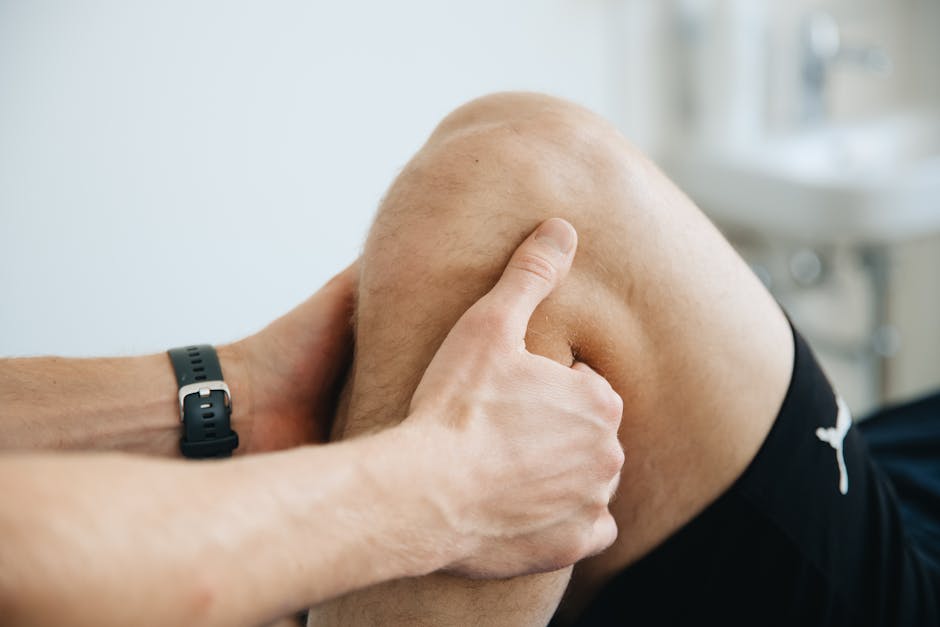
This is where CRM Wellness Center makes the biggest difference. Soft tissue therapy, physiotherapy, and targeted manual treatment address inflammation, improve blood flow, and help your tendon heal faster than stretching alone.
Our practitioners across greater Los Angeles use evidence-based techniques like:
Related: Shockwave Therapy for Tennis Elbow in Los Angeles
- Soft tissue mobilization to break up scar tissue and improve tendon quality
- Physiotherapy to rebuild strength and movement patterns
- Massage therapy to reduce tension in the surrounding muscles
- Acupuncture to modulate pain and enhance healing
- Regenerative treatments for more stubborn cases (platelet-rich plasma or similar options)
The combination works. You’re not relying on pain medication to mask the problem. You’re addressing the root cause.
Related: Best Calcific Tendonitis Treatment in LA 2026: 5 Top Options Ranked
Related: Best Herniated Disc Treatment Los Angeles 2026: Top 5 Ranked
Why Professional Guidance Matters
You can stretch at home. You can modify your activity. But without a practitioner who understands the biomechanics of your knee, you might be missing something critical.
Some people have poor movement patterns that keep reinjuring the tendon. Others have muscle imbalances that need correction. A few have underlying structural issues that require specific attention. Self-diagnosis and generic online workouts often miss these nuances.
When you work with a skilled physical therapist or chiropractor who specializes in sports injuries, you get a personalized assessment. They identify exactly what’s driving your pain, design a recovery plan tailored to your activity level and goals, and progress you safely back to full function.
That’s the standard of care you’ll find at CRM Wellness Center throughout Los Angeles, from the Hollywood Hills to Manhattan Beach, and everywhere in between. We’ve been serving this community with science-based, multi-disciplinary care for years.
The Recovery Timeline You Should Expect
How long does this take? Typical timeline:
- Weeks 1-3: Pain reduction and initial activity modification. You start noticing improvement with basic stretching and modified training.
- Weeks 4-8: Strength and flexibility gains. Your range of motion improves. Pain with loading activities decreases significantly.
- Weeks 8-12: Return to sport preparation. You’re working back into your normal activity level under professional guidance.
- Weeks 12+: Full return to activity with maintenance strategies to prevent recurrence.
This assumes consistent effort, professional treatment, and smart compliance with load management. Some people heal faster. Others with more chronic inflammation need a longer approach.
The key is that you’re seeing improvement month over month. If you’re stuck in pain after 6-8 weeks of conservative care, that’s the signal to escalate to imaging or more advanced treatment options.
Getting Started With Your Recovery Plan
If patellar tendinopathy is slowing you down, your next step is a proper evaluation. You need someone to assess your movement, test your strength and flexibility, understand your activity history, and build a plan that fits your life.
CRM Wellness Center offers comprehensive assessments that combine physical examination, movement analysis, and treatment planning all in one visit. We serve patients across the greater Los Angeles area, including communities from Malibu to Long Beach, and we’ve specialized in exactly this kind of injury recovery for years.
No surgery. No long-term medication. Just smart, evidence-based care designed to get you back to what you love doing.
Frequently Asked Questions
Can patellar tendinopathy heal without surgery?
Yes. Conservative management (activity modification, stretching, strengthening, and hands-on therapy) resolves patellar tendinopathy in the vast majority of cases. Surgery is rarely needed and is typically reserved for chronic cases that don’t respond to months of conservative treatment. Most people see significant improvement within 8-12 weeks with the right approach.
How do I know if I have patellar tendinopathy versus other knee pain?
Patellar tendinopathy has a specific signature: pain localized to the lower pole of the kneecap that increases with jumping, squatting, running, or other loading activities. Pain typically worsens with activity and may improve with rest, though it can feel stiff after inactivity. A physical therapist or chiropractor can confirm this with specific movement tests and imaging if needed.
Is stretching alone enough to fix jumper’s knee?
Stretching is necessary but not sufficient. You need the full strategy: load management, stretching, strengthening, and professional hands-on treatment. Stretching addresses flexibility, but it doesn’t reduce inflammation, improve blood flow, correct movement patterns, or rebuild strength the way combined treatment does. Most people need professional guidance to recover completely.
When should I consider regenerative treatments for patellar tendinopathy?
If you’ve done conservative treatment consistently for 12 weeks and you’re still experiencing significant pain with loading activities, regenerative options like platelet-rich plasma (PRP) or similar treatments may be worth exploring. These accelerate healing in stubborn cases. Your practitioner can recommend timing and whether it makes sense for your situation.