

That shooting pain radiating down the back of your leg when you sit? Yeah, that’s likely sciatica. And if you’re dealing with it right now, I get it—it’s uncomfortable, frustrating, and honestly makes you want to avoid sitting altogether. The good news: shooting pain down the back of your leg when sitting is one of the most manageable nerve conditions out there, and most people recover without needing surgery or heavy medication.
Let me break down what’s really happening inside your body, why sitting makes it worse, and the actual steps you can take to get relief.
Related: Dull Ache in Shoulder When Lifting Arm: LA Pain Relief Guide
Related: How Does a Decompression Table Work? LA Pain Relief Guide
Related: Spinal Decompression Therapy Benefits: Pain Relief Explained
Related: Sharp Heel Pain When Waking Up: Causes & Relief
What’s Causing That Shooting Pain Down Your Leg?
Table of Contents
Sciatica is when your sciatic nerve—the longest nerve in your body—gets pinched or irritated somewhere in your lower back. This nerve runs from your lower back all the way down through your buttocks and legs. When something presses on it, you feel sharp, shooting pain that travels downward.
The most common culprits are a herniated disc, tight muscles (especially the piriformis muscle in your buttocks), or bone spurs in your spine. Sometimes it’s inflammation, sometimes it’s physical pressure. Either way, your nerve is angry and letting you know about it.
Here’s the key thing about sitting: when you sit, especially in a slouched position, the discs in your lower back compress. That increases pressure directly on your sciatic nerve. That’s why you might feel fine standing or lying down, but the second you sit for 10 minutes, that shooting sensation kicks in.
Why Sitting Makes It So Much Worse
Think of your lower back like a sandwich. The discs are the filling, and the bones are the bread. When you sit, gravity pushes that filling backward, right toward where your nerves live. If your disc is already bulging or your nerve is already irritated, sitting is basically pressing directly on the problem.
Bad posture makes it even worse. Slouching forward collapses the space where your nerve lives. Even a forward head position can pull tension down your whole spine.
The longer you sit without moving, the tighter your muscles get. Tight muscles trap your nerve. It’s a vicious cycle that feeds itself.
The First Thing You Should Actually Do
Before you panic and think you need imaging or surgery, start here: take breaks. Stand up every 20-30 minutes. Seriously. This single habit stops the constant compression and gives your nerve a chance to breathe.
Next, check your posture right now. Sit back fully in your chair so your lower back touches the backrest. Keep your feet flat on the floor. Your hips should be slightly higher than your knees. This simple adjustment reduces disc pressure immediately.
If you’re in acute pain, ice for 15 minutes can help reduce inflammation. Alternate with heat after the first 48 hours to loosen tight muscles.
Stretching and Movement for Immediate Relief
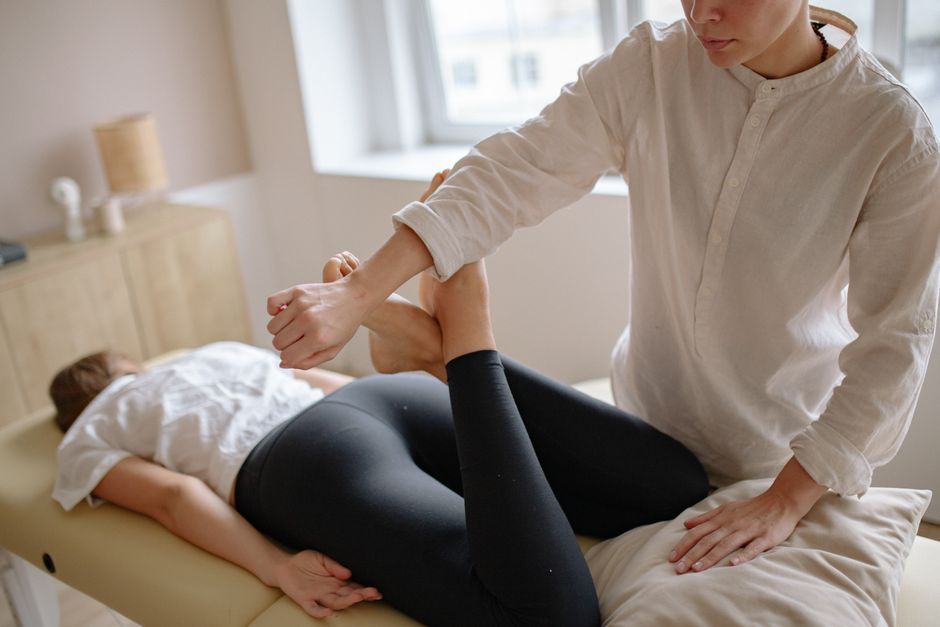
Here are the stretches that actually work for sciatica pain:
- The Pigeon Pose: Sit on the floor, bend one leg in front of you, keep the other leg extended behind you. Lean forward gently. Hold for 30 seconds. This opens up the piriformis muscle where your nerve often gets trapped.
- Knee to Chest: Lie on your back, pull one knee toward your chest, hold for 30 seconds. This decompresses your lower back.
- Spinal Twist: Lie on your back, pull one knee across your body toward the opposite side. Let gravity do the work. Hold 30 seconds each side.
- Standing Forward Fold: Hinge at your hips and let your upper body hang. Don’t bounce. Just breathe and let gravity stretch your hamstrings and lower back.
Do these stretches 2-3 times a day. Consistency matters more than intensity. You’re not trying to be a gymnast; you’re trying to reduce nerve pressure.
When Self-Care Isn’t Enough
If you’ve been doing stretches and taking breaks for two weeks and the pain is still shooting down your leg, it’s time to get professional help. CRM Wellness Center specializes in exactly this kind of nerve pain, and our team can identify what’s actually trapping your sciatic nerve.
Physical therapy is the gold standard. A physical therapist will assess your posture, strength, and flexibility, then create a targeted plan to decompress your nerve and prevent this from happening again. They’ll teach you movements that actually fix the root cause, not just mask the pain.
Chiropractic care, especially if combined with soft tissue work, can also help. The key is releasing the tight muscles around your nerve and improving your spinal alignment so there’s less pressure on that nerve long-term.
Massage therapy and acupuncture are underrated for sciatica. Massage releases the tight muscles trapping your nerve. Acupuncture reduces inflammation and can interrupt pain signals. Both pair perfectly with other treatments.
What Your Doctor Might Suggest (And What Actually Works)
Most doctors will start with anti-inflammatory medication like ibuprofen. That can help, but it’s a bandaid—it’s not fixing the underlying compression.
If you’ve had imaging done and your doctor suspects a herniated disc, they might recommend physical therapy first, which is smart. Surgery should be your absolute last resort, and most cases of sciatica resolve without surgery when treated conservatively.
According to the National Institute of Neurological Disorders and Stroke (NINDS), most people with sciatica recover within weeks to months with appropriate conservative care. That’s your baseline expectation.
The Real Game-Changer: Prevention

Once your pain settles, you need to prevent it from coming back. That means staying active, maintaining good posture, and strengthening your core. A weak core forces your lower back to absorb all the stress, and that’s when your disc bulges and your nerve gets pinched.
You don’t need to become a gym person. Walking 20-30 minutes most days, doing basic core exercises (planks, dead bugs, bird dogs), and keeping your hip flexors loose is enough to keep sciatica from becoming a chronic problem.
Related: Best Chiropractor for Chronic Back Pain Los Angeles 2026
Ergonomics at work matter too. If you sit all day, invest in a good chair, use a lumbar support pillow, and take those movement breaks seriously. Your future self will thank you.
Getting Professional Help in Los Angeles
If you’re in the LA area and that shooting pain is affecting your quality of life, CRM Wellness Center offers multi-disciplinary pain management that combines physical therapy, chiropractic care, massage, and acupuncture. Instead of a one-trick-pony approach, you get a team that looks at your whole situation and builds a treatment plan that actually sticks.
Most people see real improvement within 4-6 weeks of consistent treatment. Some recover faster. The key is starting early and staying consistent instead of waiting until the pain is unbearable.
Quick FAQ on Shooting Leg Pain When Sitting
Is shooting pain down my leg when sitting a sign of something serious?
Usually no. Sciatica is annoying but not dangerous. That said, if you also have loss of bladder or bowel control, severe numbness in your groin, or progressive muscle weakness, see a doctor immediately. Those are rare red flags. For regular sciatica pain, conservative care works for 90% of people.
How long does sciatica usually last?
Most acute sciatica resolves within 4-12 weeks with proper treatment. Some people feel better in days, others take a few months. It depends on what’s causing it and how aggressively you treat it. Chronic sciatica that goes untreated can last longer.
Can I prevent shooting pain down my leg from coming back?
Absolutely. Stay active, keep your core strong, maintain good posture, and take movement breaks if you sit for long periods. Address tight hip flexors and glutes before they trap your nerve again. Most people prevent recurrence through these simple habits.
What’s the fastest way to get relief from sciatica pain?
A combination of stretching, posture correction, and professional treatment works fastest. Anti-inflammatories can help short-term, but they don’t fix the root cause. Physical therapy combined with chiropractic or massage care typically gets people relief faster than any single approach alone.